






Blog



In material handling applications—particularly when lifting stone slabs—grip performance depends on more than just clamping force. For lifting systems that use grip pads, such as scissor-type slab clamps, both contact area and grip pad surface design play a critical role in maintaining stability, safety, and control.
Although classical friction theory often simplifies these interactions, real-world lifting conditions introduce additional mechanical factors that significantly influence grip behavior.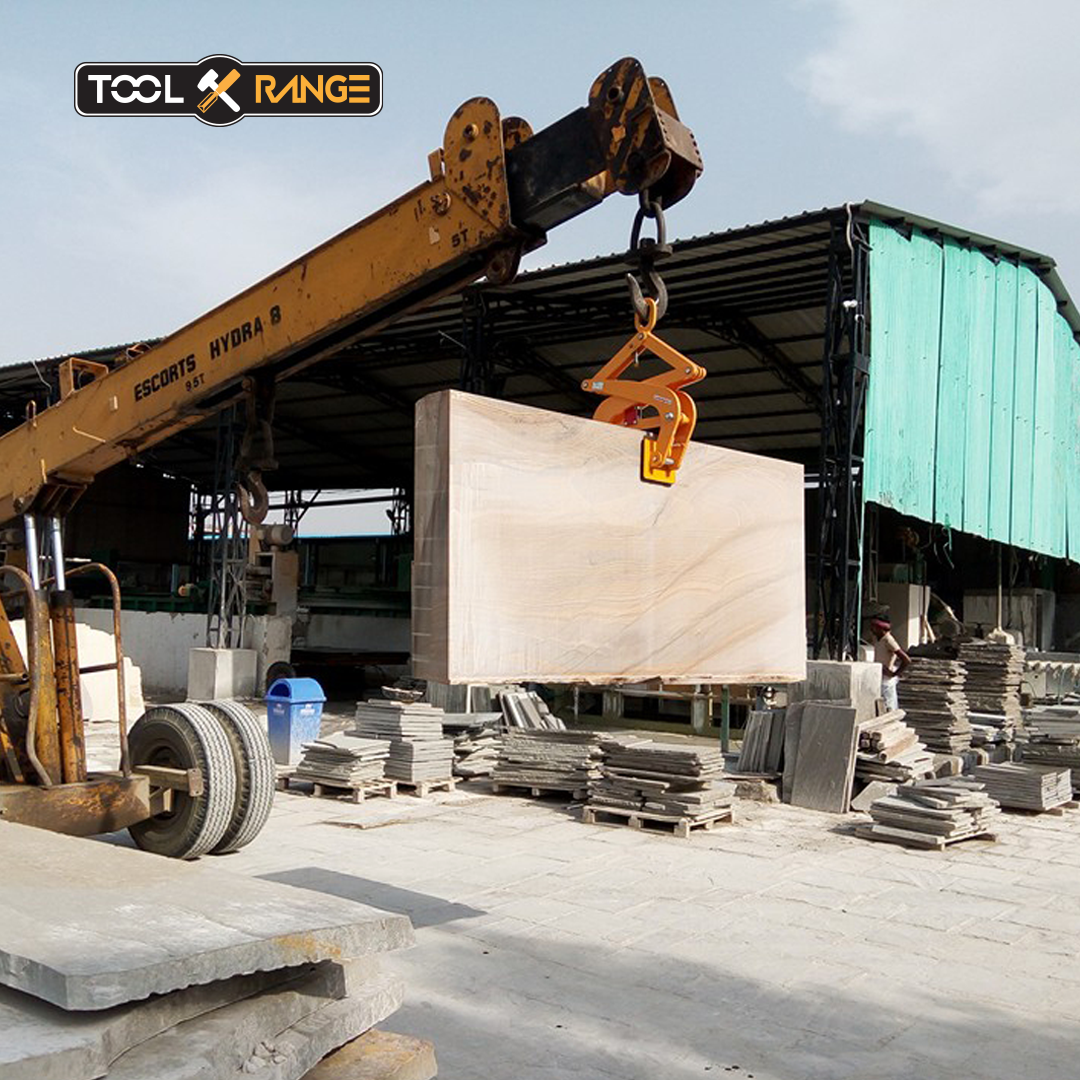
In basic physics, friction is described by the equation F = μN, where contact area is not explicitly included. However, in practical lifting environments, contact area directly affects how friction is generated and maintained.
Improved Load Distribution: A larger contact area allows clamping forces to be distributed more evenly across the stone surface. This reduces localized stress concentrations that could otherwise lead to surface damage or unstable gripping conditions.
Increased Resistance to Slippage: With more surface in contact, friction can act across multiple points simultaneously. This is especially important when lifting heavy slabs or handling materials with slight surface variations.
Greater Control of Irregular Loads: Stone slabs are rarely perfectly uniform. A broader contact area helps the clamp adapt to minor inconsistencies in thickness or flatness, improving overall stability during lifting and positioning.
While contact area establishes the foundation for grip, surface patterning determines how effectively that contact generates friction.
Grip pads used in scissor-type lifting clamps are typically made from rubber or polyurethane and feature engineered surface patterns designed to improve performance under real-world conditions.
Grip strength is not determined by pad design or clamp force alone—it is the result of their interaction.
As load weight increases, scissor-type clamps apply greater clamping pressure. This pressure drives the grip pad patterns more firmly against the stone surface, increasing friction and stability. When properly designed, this self-reinforcing effect allows clamps to handle heavier loads safely while maintaining control.
Effective lifting depends on how force is applied, distributed, and maintained under load. Contact area provides stability, while grip pad surface design ensures reliable friction in real-world conditions.
By combining optimized contact geometry, engineered grip patterns, and gravity-assisted clamping mechanisms, modern lifting clamps can safely handle heavy stone slabs while minimizing surface damage and reducing the risk of slippage.
